
Discover Moroccan Culture
Where the Atlas meets the Atlantic, the Sahara meets the Mediterranean — and centuries of Berber, Arab, Andalusian and African heritage live in every alley, market, and meal.
A Mosaic of Civilizations
Morocco’s identity is woven from many threads. Indigenous Amazigh (Berber) communities have lived here for millennia. Arab dynasties brought Islam and a flourishing of arts in the 7th century. Andalusian refugees fleeing Spain enriched its cities with poetry, gardens, and craftsmanship. Sub-Saharan trade routes wove rhythm and color into its music and cuisine. Today, Morocco speaks Darija, Tamazight, French, and Spanish — sometimes all in one conversation.
Architecture & Craft
Zellige tilework, carved cedar ceilings, and tadelakt plaster transform riads and madrasas into geometric poetry. The medinas of Fez and Marrakech are UNESCO-listed living museums.
Music & Rhythm
From Gnawa trance ceremonies rooted in West African spirituality to Andalusian classical orchestras and Amazigh ahidous dances, Moroccan music is a layered conversation across continents.
Hospitality (Diyafa)
A guest is a gift from God. Mint tea, poured from height into small glasses, is the universal welcome — symbolizing friendship, generosity, and the unhurried art of conversation.
The Cuisine
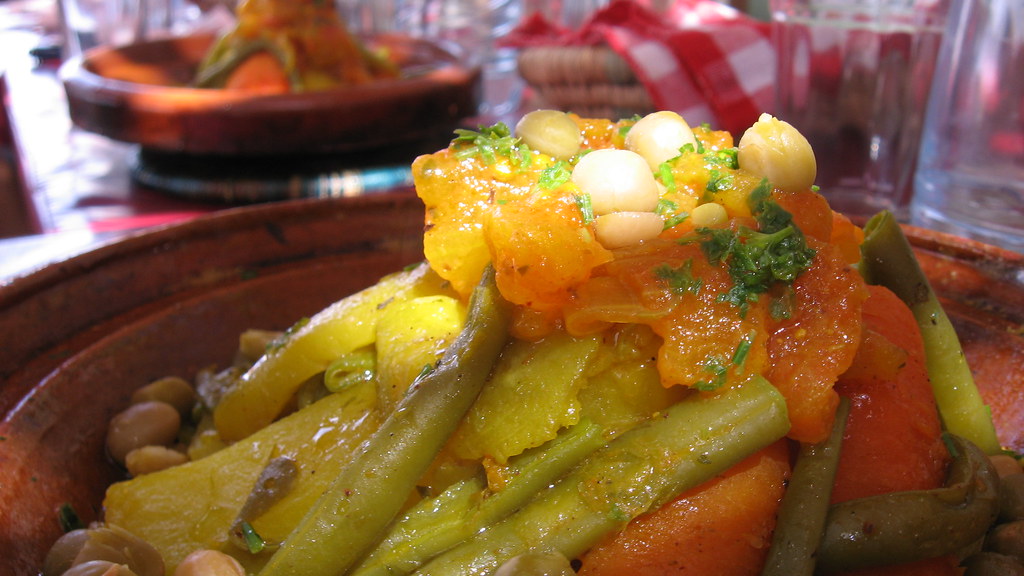
Slow-cooked tagines of lamb with prunes, chicken with preserved lemon and olives. Steamed couscous on Fridays. Pastilla wrapping pigeon and almonds in flaky warqa. Saffron, cumin, ras el hanout, orange blossom — Moroccan cuisine is a generous, fragrant pantry pulled from souks that have traded the same way for a thousand years.
- Tagine — slow clay-pot stews
- Couscous — the Friday family ritual
- Mint tea — three glasses, three meanings
- Harira — the soup of Ramadan